
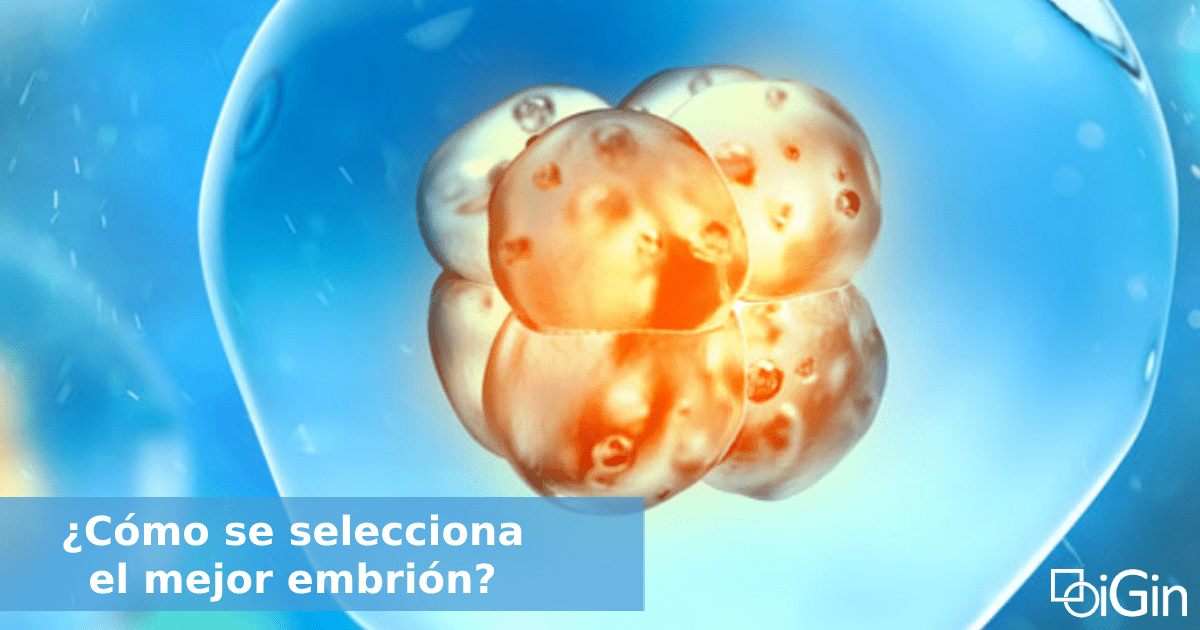
iGin’s laboratory professionals are proven embryologists, experts in manipulating, monitoring and caring for gametes (eggs and sperm) and developing embryos. This allows them to assess their individual potential and identify those that could lead to pregnancy.
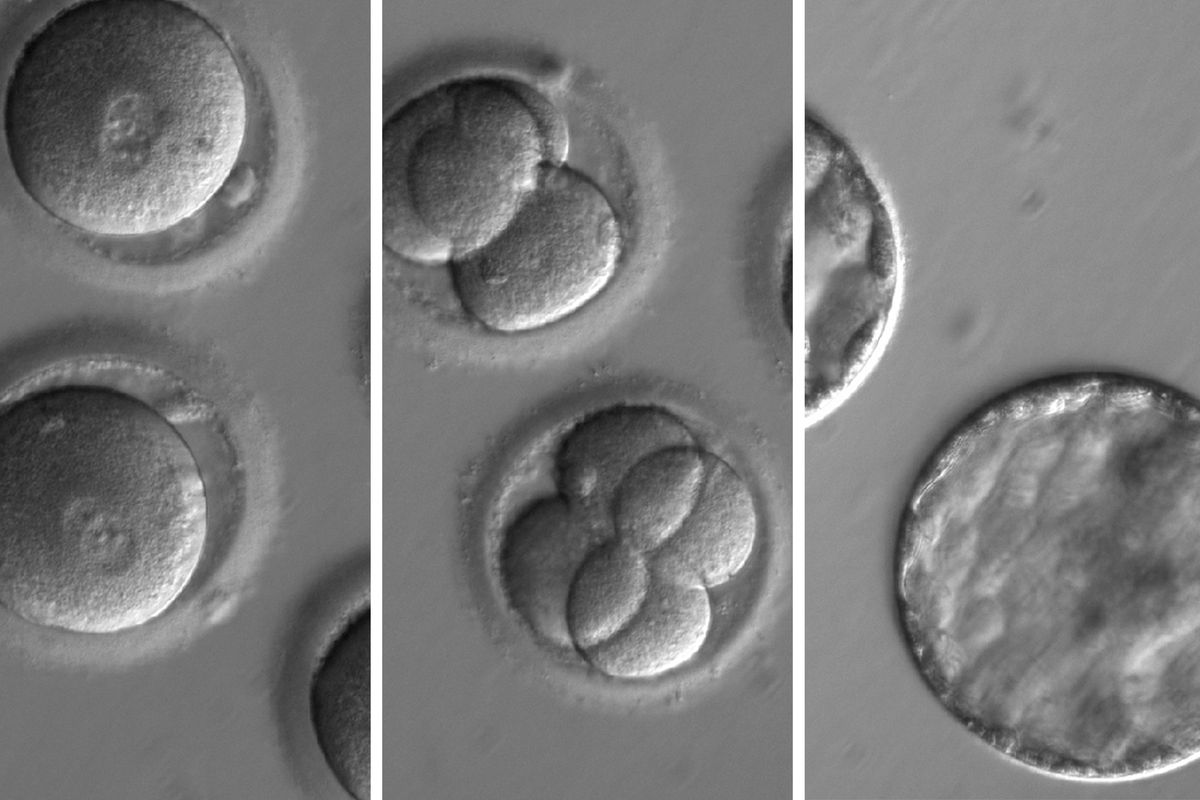
But before understanding how an embryo is selected for transfer, it is important to know the stages of evolution that an egg goes through to become a viable embryo. There are four stages:
- The first is fertilization: the union of the female gamete (ovum) with the male gamete (sperm) to form a fertilized egg, which is now called a zygote.
- Next, on day 2, cell division takes place. The fertilized egg divides into two cells. Each of these divides again, and so on. By day 3 of development, the embryo is expected to have at least 6 to 8 cells. The rate of division is very important and can indicate the viability of the embryo.
- Around day 4, the next stage begins. The embryo’s cells become compacted and form junctions between them, giving rise to what is known as the morula.
- The final stage of development occurs around days 5 and 6. This is when the embryo reaches the blastocyst stage. It is undergoing major changes and the cells are differentiating into two distinct cell lines: the inner cell mass (destined to form the baby itself) and the trophectoderm (which forms the extra-embryonic material, such as the placenta and amniotic sac). Only the best quality and condition embryos will reach blastocyst stage, and they are undoubtedly the ones with the highest probability of implanting in the mother’s uterus. At iGin, we take all our embryos to this stage.
There are several factors that make an embryo successful. There are a series of milestones in cell division during the first days of development that are a good indicator; division that is too slow or too early could lead to an unfavorable development.
The level of fragmentation caused by each cell division is key. A high level of fragmentation between cells is an indicator of poor prognosis. Uniformity of cell size is also considered.
How does an embryologist select the best embryos to transfer?
This is a complex procedure. It could be said that the number of cells and their quality come into play in the assessment. Each of the cell lines is taken into account. In the internal cell mass, a compact mass of cells is assessed. In the cells of the trophectoderm, a high number of cells and a good distribution and uniformity of these around the edge of the blastocyst are sought.
To optimize this process, iGin incorporates cutting-edge technology into its laboratories that helps our embryologists in selection: KIDSCorey IDASCore. Inteligencia Artificial y algoritmos morfocinéticos que sólo iGin posee en el norte de España. Estas herramientas analizan cada uno de los embriones de la paciente, contrastándolos con información recopilada de millones de embriones de todo el mundo, y relacionan sus patrones de desarrollo con su capacidad de implantación. Esto ayuda al equipo del laboratorio a elegir el embrión más prometedor en términos de potencial evolutivo.
At iGin we apply this cutting-edge software in all reproduction techniques that require culture: IVF-ICSI, egg donation, ROPA method or Preimplantation Genetic Diagnosis.