


Frozen Embryo Transfer

Achieve pregnancy with embryos created in previous cycles.

Book your free consultation

What is a frozen embryo transfer?

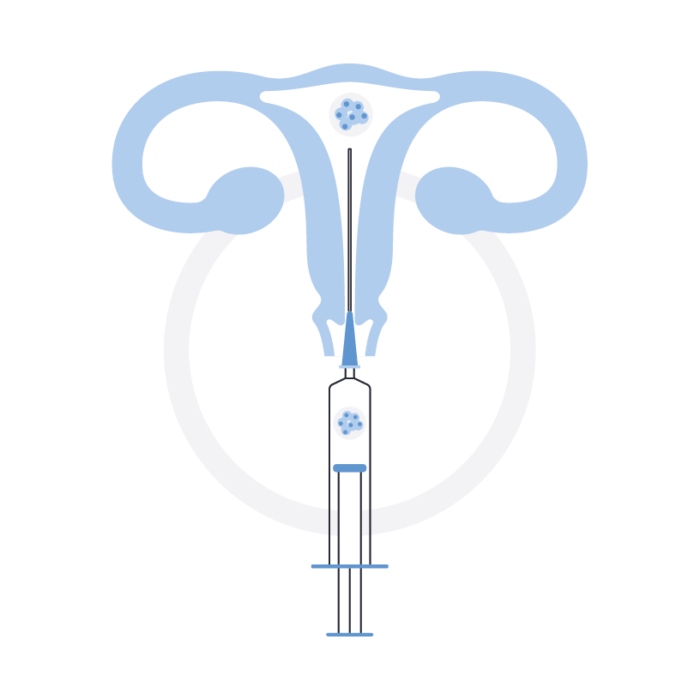
This treatment consists of thawing embryos created from previous IVF-ICSI cycles and transferring them to the patient’s uterus to achieve pregnancy. Endometrial preparation is usually required through hormonal treatment to ensure the uterus and endometrium are in optimal conditions to help achieve implantation.

Who is this treatment recommended for?

Patients with existing embryos

Patients who have undergone treatment in the past and have embryos stored in the clinic.

Failed treatments

Previous embryo transfers that did not result in pregnancy.

Patient’s decision

When, for either medical or personal reasons, the patient chooses to delay the embryo transfer.

Genetic Diagnosis

When, by medical indication, it is necessary to carry out Preimplantation Genetic Diagnosis on embryos.

Benefits of a frozen embryo transfer

Multiple attempts

By having frozen embryos, we can carry out several transfers without the need to repeat the entire IVF-ICSI process.

Safe and effective technique

High survival rates of the vitrified embryos

Flexibility in planning

Allows the patient to plan her pregnancies according to her circumstances.

Step-by-step guide for the transfer of frozen embryos

Ultrasound scans and hormonal controls are carried out to check the condition of the endometrium. Medication can be used to improve its condition and help achieve implantation of the embryo.

Approximate duration of 8-10 days.

Once the endometrium has reached its optimal condition, the most suitable embryo is selected and the thawing process begins.

Takes place the same day as the transfer.

The embryo is introduced into the uterus with a fine catheter. After a few minutes of rest in the clinic, you can continue with your routine.

The embryo transfer takes approximately 15 minutes.

12 days after the embryo transfer, a blood test (Beta-hCG) is carried out to check for pregnancy. If the result is positive, the patient should go for an early pregnancy ultrasound scan to confirm everything is correct. Two weeks later, the patient should go for another follow-up ultrasound scan.

Approximately 12 days after the embryo transfer.

Techniques included


Matcher System
An advanced electronic traceability system that ensures the correct identification of all biological samples at every stage of treatment. Using barcodes and electronic verification, the correspondence between the patients and the samples is automatically verified before any procedure. This system provides complete control and added peace of mind for the medical team.
Personalized embryo transfer
The transfer can be carried out using a fresh or frozen cycle, adapting to the characteristics and needs of each patient. This allows the optimal timing for implantation to be chosen, either by taking advantage of the patient’s natural hormonal cycle or through controlled endometrial preparation. Adapting the strategy instead of following a standard protocol significantly improves the chances of success and reduces the risk of implantation failure, offering a truly personalized approach.
Luteal phase hormonal monitoring and thyroid function
Progesterone testing allows us to assess the progression of the luteal phase and the adequate preparation of the endometrium for implantation. In addition, we perform blood tests to ensure optimal hormonal support levels.
The evaluation of TSH (thyroid function) in patients with a history of thyroid abnormalities complements this assessment, as proper thyroid balance is essential for ovulation, endometrial receptivity and the early development of pregnancy.
Endometrial Platelet-Rich Plasma (PRP)
It is an innovative technique that uses the patients own biological resources to improve endometrial receptivity in certain situations. From a blood sample, a platelet concentrate rich in growth factors is obtained. These factors help stimulate the regeneration and repair of the endometrial tissue. It is a simple and quick procedure, particularly beneficial for patients with a thin endometrium, low receptivity or previous implantation failures associated with those over 45 years old, whenever the medical team consider it may be beneficial.
Early pregnancy scan monitoring
After pregnancy is confirmed, we monitor two ultrasound pregnancy scans to verify the correct progression of the pregnancy during its first weeks. This follow-up allows us to confirm implantation, assess embryonic development, and support the patient during a key stage of the process, ensuring continuity of care from the same clinic and providing reassurance from the very first positive result.
Transfer of embryos and samples
When a patient choose to undergo treatment at IGIN, we include the safe and controlled transfer of embryos, eggs and sperm from the originating clinic, hospital or laboratory at no additional cost.
If the patient wishes to transfer their embryos and/or samples from IGIN to another center, we take care of preparing, processing and protecting the material for transport. We do not charge for this service. In addition, we can advise the patient on selecting the most appropriate transport company, which may involve an associated cost depending on the required service.

Pregnancy success rate of a frozen embryo transfer

Vitrification does not alter or affect the quality and viability of the embryos. Therefore, the pregnancy rate is the same as the treatment performed.

79%

IVF-ICSI

86%

PGD

88%

Egg Donation

88%

Double Donation

79%

ROPA Method

Frozen embryo transfer cost and financing

Our closed treatment package includes all of the techniques you may need to help achieve pregnancy. There may be the option to pay the total cost in installments without any interest.

Frozen Embryo Transfer

2.055€

Your pregnancy with embryos created in previous cycles

  • Ultrasound and hormone analysis controls (unlimited)
  • Laboratory preparation and processes
  • IMT Matcher: for electronic identification and traceability of genetic samples
  • Embryo devitrification
  • Embryo transfer
  • Endometrial P.R.P Platelet-Rich Plasma (if needed)
  • Progesterone monitoring pre-/post-transfer
  • Specific transfer procedures (if needed)
  • Beta-hCG blood test to check for pregnancy (unlimited)
  • Two gestational controls
Book your free consultation Cost breakdown

We love hearing success stories like these

Thanks to IGIN, we are now a family of four. After our first treatment, and now that our little one has started school, we decided to try for a second child. We had embryos stored at the clinic and giving our son a little brother was extremely easy.

Sara and Miguel

It really is handy not to have to go through the entire treatment again, including the administration of medication and the egg retrieval. Unfortunately, after my first transfer, I suffered a miscarriage, however with my second try everything went perfectly!

Carol P.L.

We come from another province and decided to transport our embryos to IGIN. We recently underwent an embryo transfer, and we are happy to announce that I am now 5 months pregnant!

Estefanía

Book your free consultation

If you have any doubts about fertility treatments or you would like to check the state of your reproductive health, we are able to offer a free, zero-obligation consultation with our Doctors.

Book your free consultation

FAQs about a frozen embryo transfer


What is a frozen embryo transfer?
It is a procedure in which a previously frozen embryo is thawed and transferred to the patient’s uterus.
Are there any benefits to transferring frozen embryos?
It offers flexibility in planning, allowing the transfer to be carried out at the most suitable time for the patient, and avoids the need for repeated ovarian stimulations, reducing a physical and emotional impact.
Will it be more difficult to achieve pregnancy using frozen embryos?
Using frozen embryos does not decrease the chances of success, as it allows the transfer to be carried out in an optimal hormonal environment.The embryos do not lose quality, therefore maintain their implantation and development capacity.
Is any type of preparation necessary?
Yes, endometrial preparation is necessary, which is usually done using hormone medication, ensuring it is in the optimal condition to receive the embryo.
How long can embryos be frozen for?
The embryos can be kept frozen indefinitely without losing their viability, making it possible to plan the transfer at the most suitable time for the patient.