
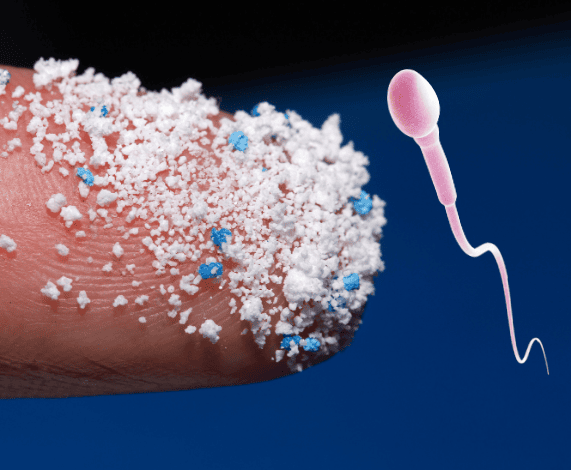
Microplastic pollution has gone from being solely an environmental issue to becoming a direct concern for human health. A recent study has revealed the presence of these tiny particles in reproductive organs such as the testicles and ovaries, as well as in semen. These findings raise questions about their possible impact on fertility.
What are microplastics?
Microplastics are small plastic particles, less than five millimeters in size, that are generated either by the fragmentation of larger waste or intentionally produced, such as those found in cosmetics or synthetic clothing. Their presence is well documented in oceans, food, and even in drinking water.
They can enter the body in several ways: by breathing contaminated air, ingesting food or beverages that contain them, or through contact. Once inside the body, they can travel through the bloodstream and accumulate in tissues and organs.
Findings in the reproductive system
The new study, presented at the annual meeting of the European Society of Human Reproduction and Embryology (ESHRE), has identified microplastics in testicles, semen, and ovaries. The analyzed samples revealed up to eight different types of polymers, including polyethylene (used in bags and packaging), PVC, and polystyrene.
Although the biological effects of this accumulation are not yet fully known, their presence in such sensitive tissues is concerning. It is suspected that they could affect semen quality or interfere with processes like ovulation, implantation, or embryonic development.
Researchers emphasize that, as of now, it cannot be categorically stated that microplastics cause infertility. However, evidence is mounting that links exposure to environmental pollutants with alterations in semen quality, ovarian reserve, and other parameters relevant to reproductive health. Animal studies have already shown adverse effects, and these new findings in humans make further research necessary.