
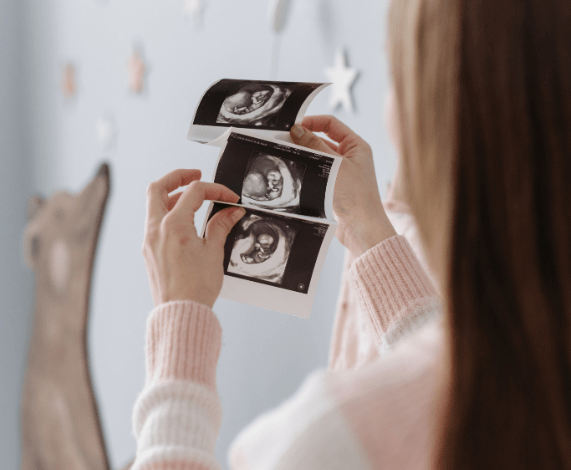
It is an experience of great significance in a woman’s life. For approximately nine months, the female body becomes home for the formation and development of the fetus until it is ready for birth. A period in which both the baby and the woman’s body undergo significant changes and transformations.
We explore how it develops month by month and what changes occur physically to accommodate and offer the baby everything it needs at all times.
• First month: the magic moment
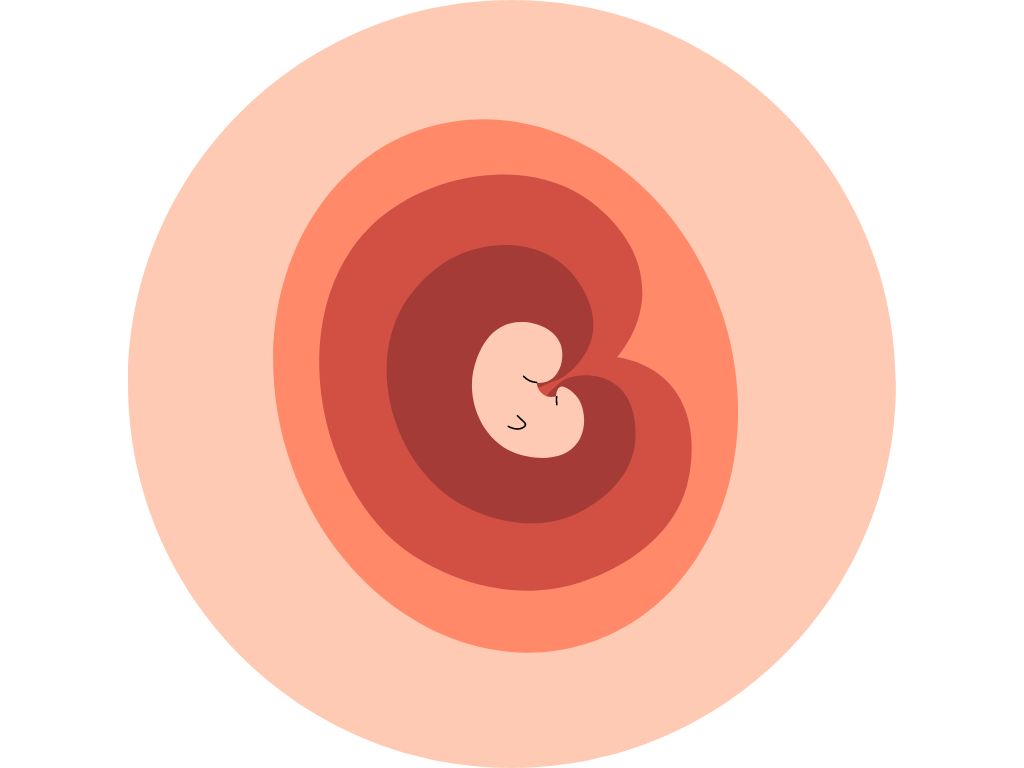
The beginning of pregnancy is marked by conception, either naturally or by embryo transfer if there are reproductive techniques. At this first stage the embryo is only a group of cells, but its DNA already contains all the information necessary for its development. Approximately eight days after ovulation the embryo will implant itself in the uterus and the release of thehormona hCG, que es la que usamos para detectar el embarazo.
Precisely because of this hormone, some women may begin to experience some mild symptoms such as fatigue, mood swings or even light bleeding, which can be confused with the beginning of menstruation.
• Second month: formation of crucial organs
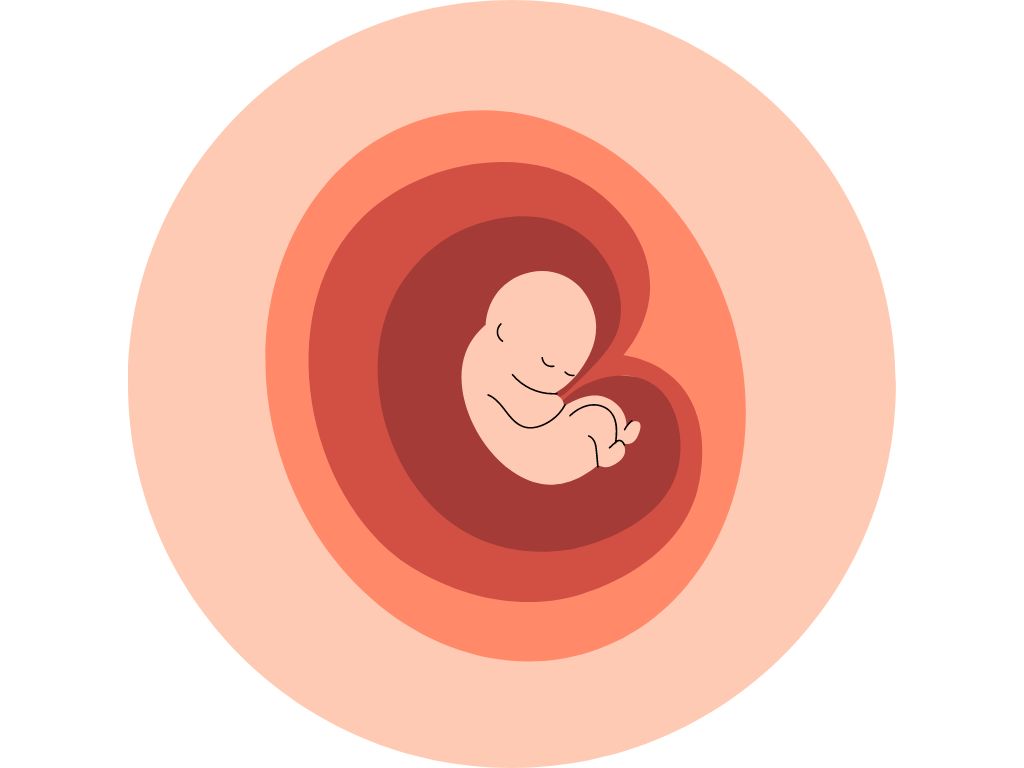
As the second month begins, gastrulation takes place: the cells of the embryonic disc give rise to three different layers (ectoderm, mesoderm and endoderm) that form the primitive organs. The baby experiences rapid growth and development. The central nervous system, eyes, ears and organs such as the heart (which is already beginning to beat), kidneys, brain, lungs and digestive system are formed. Although still tiny, the embryo becomes a fetus and is already moving, even if the mother does not notice.
The mother may notice symptoms such as nausea, vomiting, breast tenderness, increased urinary frequency and changes in appetite. It may also happen that there are hardly any symptoms at all, but this does not indicate that there is a complication. Externally, there are no noticeable changes.
• Third month: taking shape and defined features
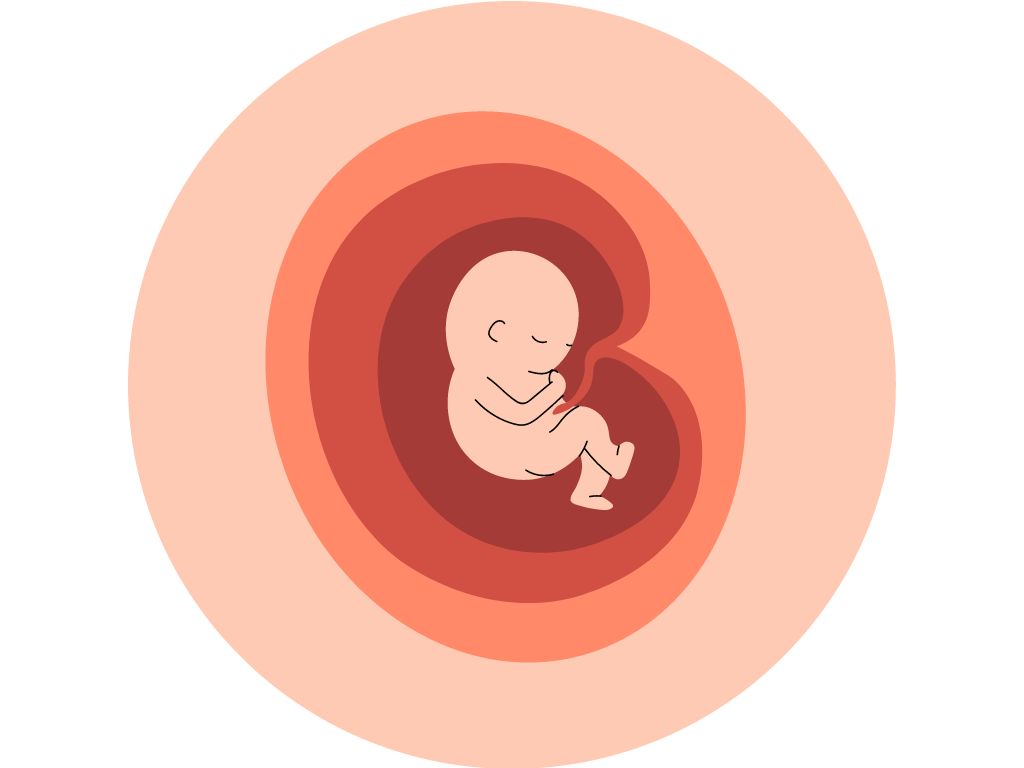
The beginning of the fetal period, when the baby grows to seven to eight centimeters. This month marks a crucial time in the baby’s development. The central nervous system develops rapidly and the fetus begins to show reflexes. Facial features begin to take shape. Organs continue to form. Fingers and toes separate and nails form.
The mother may notice a reduction in symptoms in the first few weeks, although nausea often persists for some women.
• Fourth month: accelerated growth and “kicks”
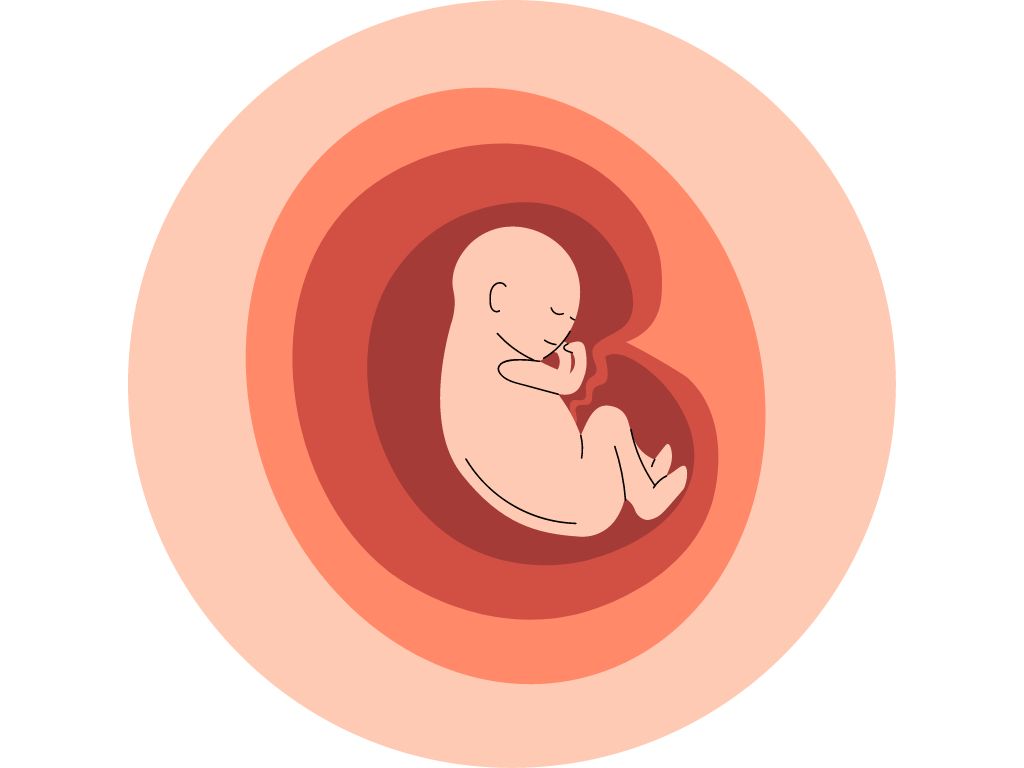
The foetus experiences rapid and significant growth. It is covered with lanugo, a fine hair on the skin that allows it to conserve body heat. Its size becomes more evident and the mother can begin to feel the first movements, an exciting moment. Despite keeping the eyes closed, the shape of the face is already defined and the neck can be seen. Fingerprints appear. The baby is now 18 centimetres long and weighs around 100 grams.
The womb is growing, as is the weight, which may make it more difficult to urinate. Some women report heartburn and back pain.
• Fifth month: the senses awaken
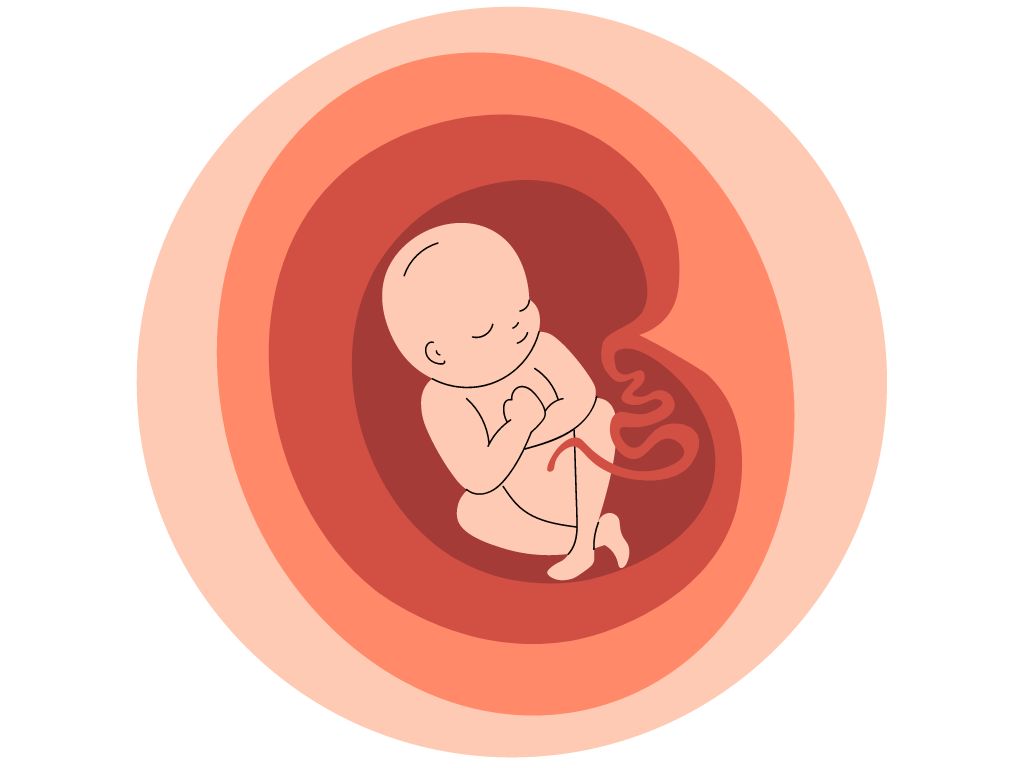
During this period, the baby’s senses awaken and become more acute. The ears develop enough to be able to hear sounds from outside, including the mother’s voice. The heart chambers (atria and ventricles) become delimited and the heart beats strongly.
The mother may feel more energetic during this month and experience changes in her hair and nails. In addition, some dark spots may appear on the skin due to increased melanin production.
The fetus may move more when the mother lies down, as it is more embedded in the pelvis when standing. This is why its movements may be less noticeable when standing up. The navel may flatten or begin to protrude. In any case, it will return to its normal appearance after delivery.
• Sixth month: response to external stimuli
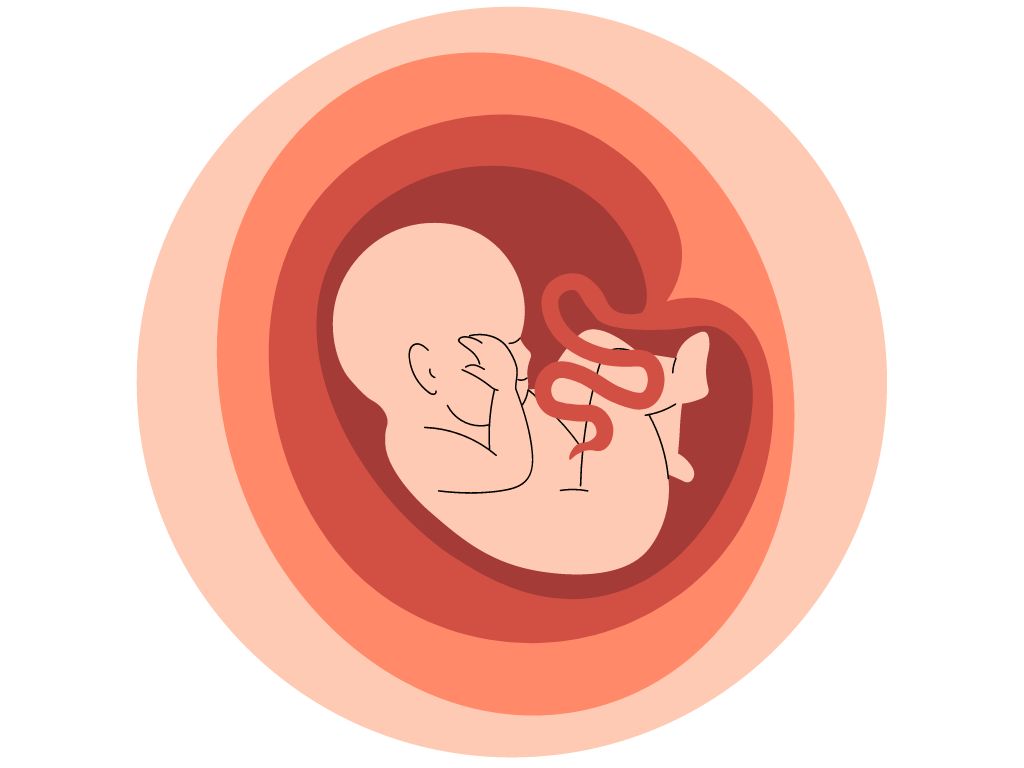
The baby continues to grow, reaching a length of approximately 25 to 35 centimetres and weighing up to 750 grams. The baby’s activity also increases. The baby’s movements become more noticeable and it can respond to external stimuli such as light or sound. Eyebrows, hair and eyelashes form and the skin becomes dull. The baby makes gestures, opening and closing the eyes or sticking out the tongue. The baby’s body proportions tend to equalise, so the size of the head is no longer so prominent.
The pregnant belly is already large. Therefore, the mother may experience symptoms such as swelling of the feet and ankles, fatigue, increased blood pressure and sleep problems due to discomfort.
• Seventh month: organ maturation and weight gain
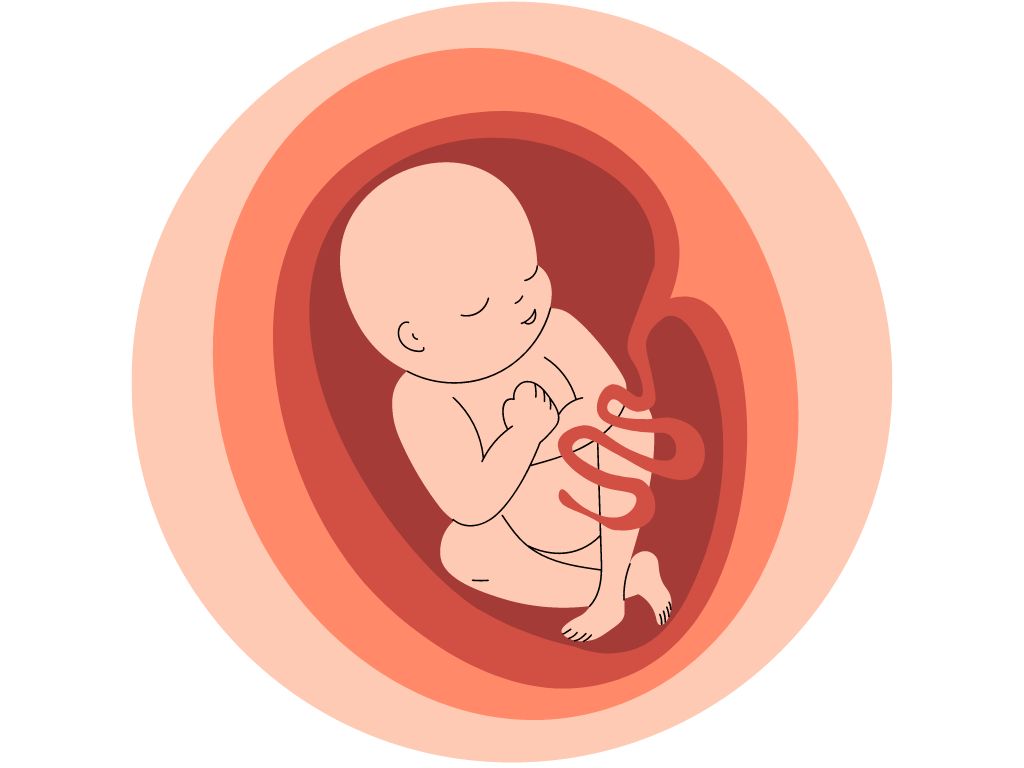
The last trimester begins. The baby continues to accumulate fat under its skin, which helps regulate its body temperature. The skeleton gains consistency. Its internal organs continue to mature and its immune system strengthens.
The mother may notice a significant increase in weight, as well as more intense fetal movements. The space in the uterus begins to become more limited and there is increased urinary frequency and a feeling of shortness of breath due to the pressure exerted by the expanding uterus.
• Eighth month: preparing for birth
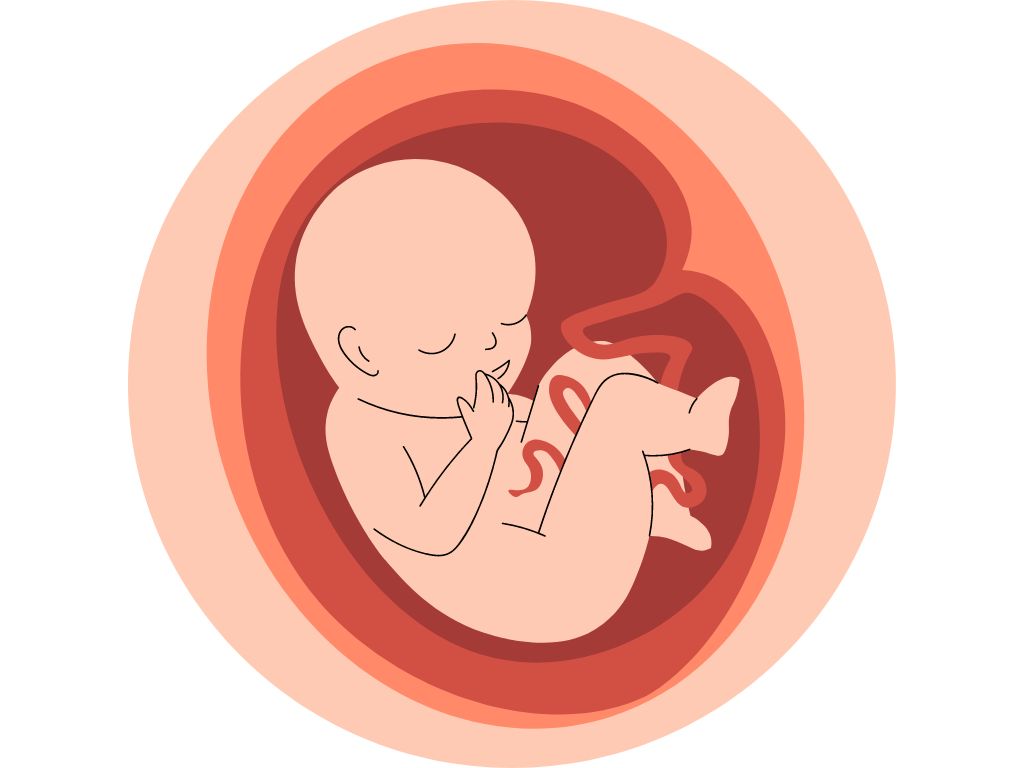
The baby is almost fully formed and continues to gain weight: it will reach about 50% of its total weight at birth. Although it is almost fully formed, its lungs are not yet mature. During this period, it is placed in the birth position, generally with its head facing downwards.
The woman’s body prepares for childbirth. She may experience more discomfort due to the increased size of the uterus. Digestion may be more difficult, slower and heavier. She may have Braxton Hicks contractions: sensations of tension and relaxation of the uterus that help prepare the body for childbirth. Fatigue increases, not only because of the weight of the baby and the size of the belly, but because it is difficult to rest and sleep.
• Ninth month: the final wait
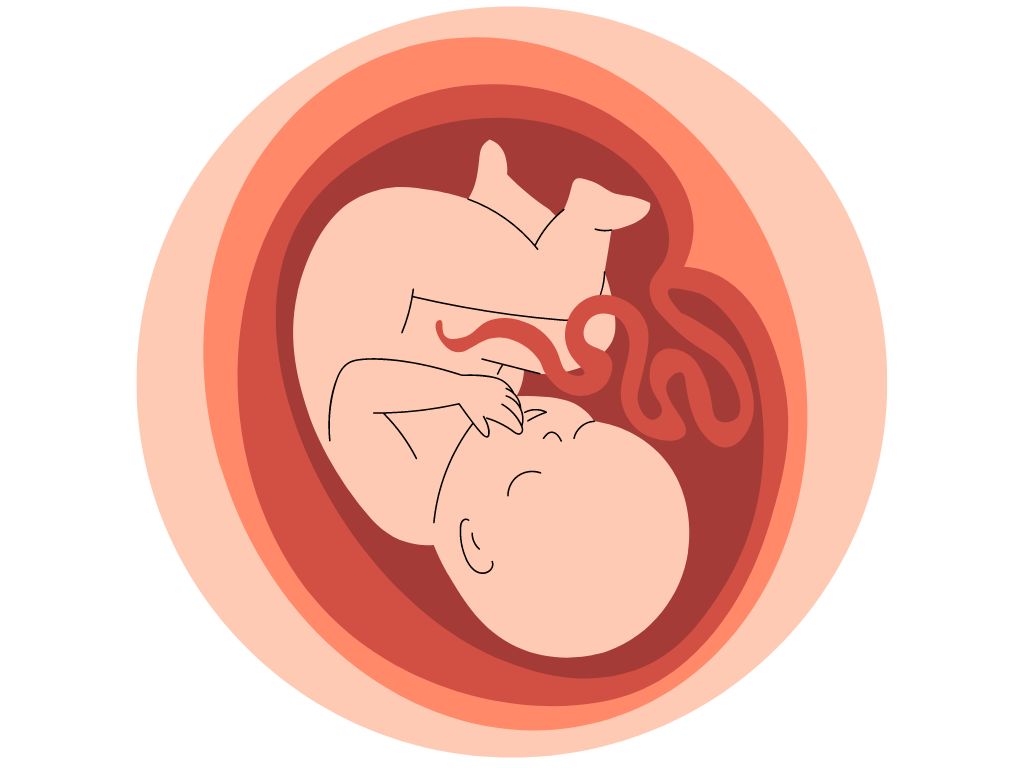
In the last month of pregnancy, the baby is fully formed and ready for birth. It can measure 50 cm and weigh an average of 2,500 g.
The baby fits its head into the mother’s pelvis. Its skin is softer, thanks to the fat that has been accumulating since the lanugo has disappeared. It moves less due to its increase in size and weight. But the mother should not go a single day without feeling its movements, which will be more abrupt, as if they were kicks, since the baby has little space.
The woman’s body is preparing even more for childbirth, and contractions may become more frequent and regular. If the baby has not yet been born after week 42, the doctor will usually suggest inducing labor, since it may be a risk for the baby to remain in the mother’s womb for longer than necessary.
