
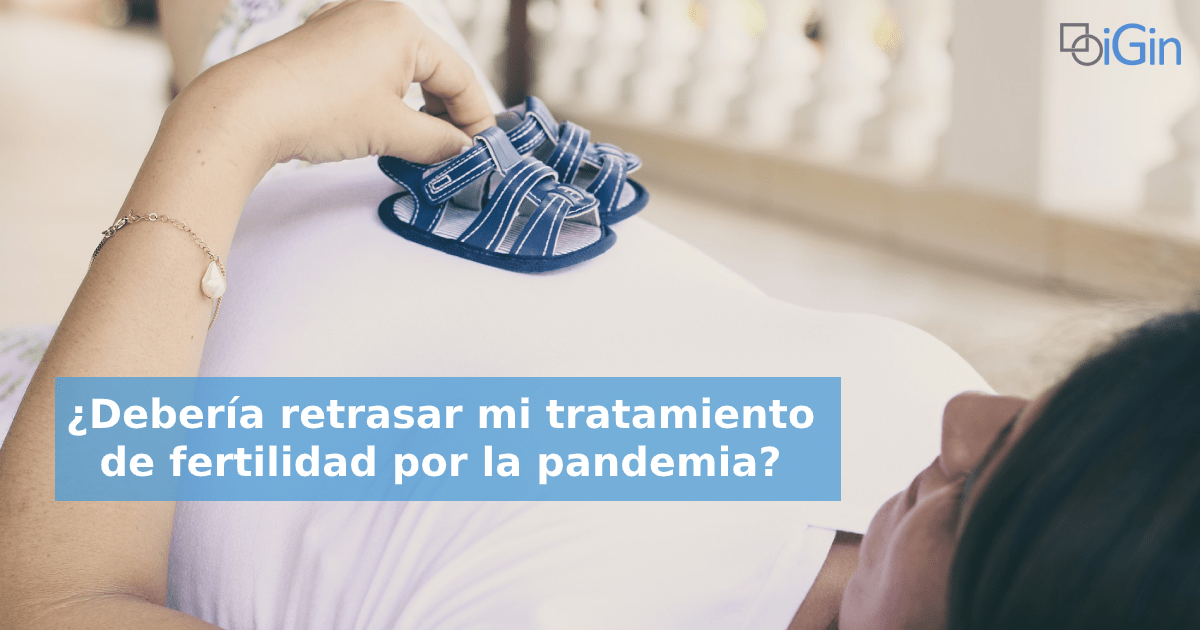
As a new wave of Covid-19 spreads across Europe, some patients are expressing their concern and wondering whether they should postpone their fertility treatments. Experts agree: they should not be delayed. In fact, this is a good time to try to get pregnant.
From an epidemiological point of view, it is impossible to predict the end of the pandemic and the progress of social restrictions that will be applied to stop the spread of the virus. The scientific community has high hopes for a vaccine whose global and widespread distribution will not be available, according to experts, before 2022. For all these reasons, it would be imprudent to talk about specific dates when we could return to life as we knew it before Covid-19. We do not know when the risk of contagion will return to levels close to zero.
While laboratories are working to find a vaccine, time is inexorably moving forward. And so is the biological clock of women, which in many cases runs counter to their desire to start a family.
Under the current circumstances, there is a consensus among fertility experts: if a woman wants to become a mother, the wait should not be prolonged. Especially for three groups of patients:
- Women with low ovarian reserve or diseases that reduce the quality of oocytes, such as endometriosis or polycystic ovary syndrome.
- Women over 35 years old.
- Cancer patients intending to preserve fertility through oocyte cryopreservation.
The fact is that infertility is not an option, it is a pathology. And in this pathology, time is a variable that drastically affects the outcome. The older the woman, the lower the ovarian reserve. A slow decline begins at age 25, which becomes more pronounced from age 30 onwards and worsens from age 35 onwards. It is then that women with a low ovarian reserve reduce their chances of getting pregnant by 2% each month. In these circumstances, one month is not decisive, but if the wait were to be extended by four or five months, there will be a significant percentage of patients who will see their chances of conceiving a child compromised.
No risk to the health of the mother and baby
As for the fear that Covid-19 will affect the pregnant woman or the baby, there is no risk. As the SEF (Spanish Fertility Society) recognises, reproductive medicine does not endanger health: “There is no trace of the virus in oocytes, semen or vaginal secretions. Sexual relations are not prohibited and pregnancy is not an additional risk factor for the appearance of complications from Covid-19. Both the mother and the baby are not in danger, transmission of the virus through the placenta has not been demonstrated.” There is no evidence that pregnant women are a risk category.
Undergoing assisted reproduction treatment at this time does not entail any risks, provided that it is carried out in qualified centres that follow current regulations regarding hygiene and safety.
Therefore, the medical recommendation is not to postpone the start of reproductive treatments. In fact, this may be a good time to pursue the dream of forming or expanding a family. Restrictions on mobility or teleworking make it easier for women to adopt certain routines that promote fertility: rest, tranquility, extra time… In addition, all travel and journeys motivated by the necessary medical visits during treatment are justified.
Don’t hesitate. If you have made the decision, Covid-19 is not an obstacle. Ask us for a free appointment at this link or by calling 946 510 700 and we will answer all your questions, as well as carry out a complete fertility study.