

After a reproductive treatment, we perform the pregnancy test in the clinic about twelve days after the transfer. We do this by means of a blood test to detect the presence of the hormone chorionic gonadotropin (hCG). This test, known as Beta-hCG, is the most sensitive and precise, a categorical confirmation of pregnancy.
But we know that the wait for the test is long. Experience tells us that it is the most emotionally complex period. Those days between the embryo transfer and the analysis generate doubts and even worry. There are many moments of uncertainty and contradictory emotions: fear of failure, excitement, impatience, hope, etc. These feelings can lead us to constantly monitor any symptoms in our body. However, during the beta wait having symptoms or not having them is normal. We professionals try to reduce the patient’s anxiety and resolve all her doubts; tranquility is a beneficial factor.
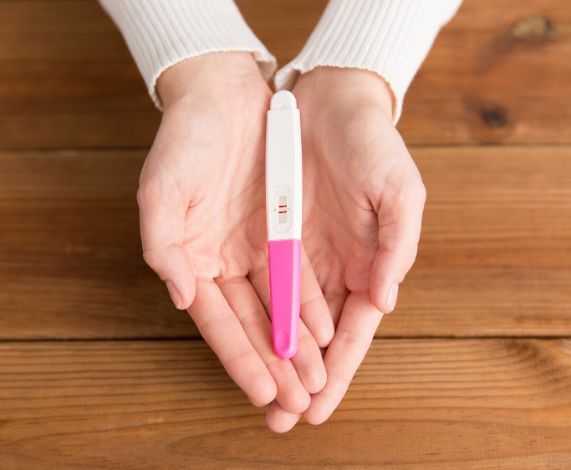
However, it is common for the patient to want to know her status as soon as possible, and it is not unusual to resort to a urine pregnancy test, even though we do not recommend it. But we understand that its easy access, price and simplicity are sometimes too tempting, although you should know that its reliability is much lower than that of the Beta-hCG test. We are going to give you some indications.
• The test detects the presence of hCG in urine. For greater sensitivity and lower risk of error, it is recommended to perform it with the first urine of the morning, since it has a higher hormonal concentration.
• Avoid drinking large amounts of fluids before the test. It can dilute the concentration of the hormone in the urine.
• There are both false positives and false negatives. Each brand has a different sensitivity, so it is a good idea to repeat the test after 48 hours.
• The ideal time to do it is 14 days after fertilization (in regular 28-day cycles). Keep in mind that in an embryo transfer we will have implanted a blastocyst that is already 5 or 6 days old, so you will have to subtract that time (so it is usually 9 days after the transfer). If you do it too early, the hormone levels will not be significant and will always be negative.
• If the result is negative, try not to feel more anxious, since this is usually due to reliability and does not reflect reality. Beta-hCG will be the one to tell us the truth.
• Of course, do not stop taking any medication that we have prescribed for you, regardless of the test result.
• Whatever the result, you may experience bleeding. Call your clinic, as this may be implantation bleeding (light) or embryo loss (usually heavier). In either case, contact your clinic.
• Try not to share the results with your loved ones, as they can generate emotions that sometimes contrast with the results of the Beta-hCG. Try to keep the information to yourself (or your partner).
Remember that the beta wait is stressful for each and every woman, but try to stay calm as much as possible and avoid giving too much importance to the possible symptoms you feel. Try to take this period as calmly as possible (aquí algunos consejos). Y si recurres a un test de orina, recuerda siempre que los falsos positivos y negativos son habituales.