
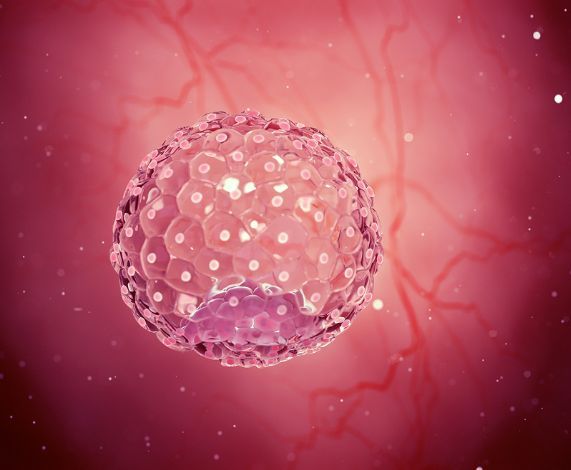
At IGIN we always do long-term culture, taking the embryos to blastocyst stage in all our treatments.
In the assisted reproduction process, many treatments require embryo culture in a laboratory. That is, obtaining the embryo by joining sperm and egg and then waiting for its proper development before transferring it to the mother’s uterus. Ideally, this embryo should have reached the blastocyst stage: 5 or 6 days of development and a complex cellular structure made up of around 200 cells.
Why is it preferable? We list some reasons for this.
•More advanced embryonic development: Blastocysts are embryos that have reached a more advanced stage of development compared to younger embryos. Normally, in a blastocyst the cells have differentiated into two distinct types: the inner cell mass, which will become the fetus, and the trophoblast, which will become the placenta and fetal membranes. This advanced stage suggests greater viability and implantation potential.
• Greater selection capacity: By allowing embryos to develop to the blastocyst stage, embryologists can assess their quality more accurately, further aided by herramientas como la Inteligencia Artificial. Esto significa que los embriones con una mayor probabilidad de éxito pueden ser seleccionados para la transferencia, lo que aumenta las posibilidades de un embarazo exitoso y reduce el riesgo de aborto espontáneo.
•As a selection process has been carried out following very rigorous medical criteria, blastocysts usually present a lower percentage of chromosomal alterations, which results in a lower risk of pregnancy loss.
•Better synchronization with the mother’s uterus: Under natural pregnancy conditions, a five-day-old embryo would be at the blastocyst stage when it reaches the uterus for implantation. Blastocyst transfer seeks to mimic this natural process, which can increase the chances of the embryo successfully implanting in the uterine lining.
• Reduced risk of multiple pregnancy: Blastocyst transfer allows for more precise selection of the best embryo to implant, reducing the need to transfer multiple embryos to increase the chances of success. This, in turn, reduces the risk of multiple pregnancy, which is associated with medical complications for both mother and babies.

If you also want to know what factors make an embryo optimal for transfer, you can read it here.
The IGIN approach allows for a higher percentage of successful implantation and a reduction in potential complications, leading to higher pregnancy rates. Please do not hesitate to make an appointment if you have any questions, it is free and without obligation.