
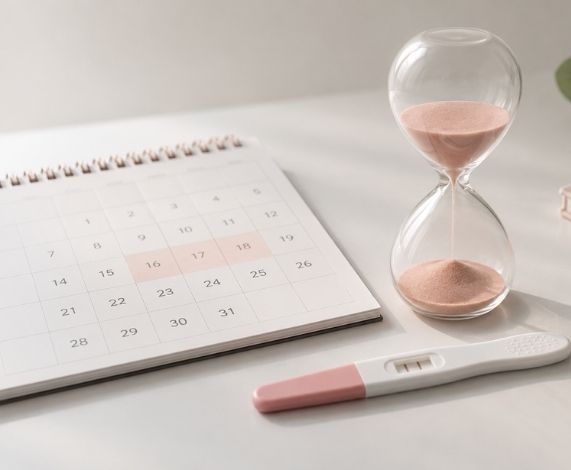
When a couple decides to try for a baby, it is common to expect pregnancy to happen naturally within the first few months. However, this does not always happen. As time goes by, it is normal to start having questions: How long can it take to get pregnant? Is it normal to have been trying for six months? When should I visit a fertility clinic?
The answer depends mainly on age, although medical history, menstrual cycle regularity, and the fertility of both partners also play a role.
Knowing when to seek advice can help identify potential difficulties early and avoid unnecessary delays.
How long is it normal to take to get pregnant?
Getting pregnant does not always happen straight away, even when there are no fertility issues. Some sources estimate that more than 80% of couples in which the woman is under 40 achieve a natural pregnancy within a year of having regular, unprotected sex.
Therefore, trying to get pregnant for several months without success does not necessarily mean there is a problem. However, the recommended waiting time varies with age, particularly from the age of 35 onwards.
While trying to conceive, there are also several factors you can review. In this article, you will find 10 tips if you are struggling to get pregnant, from understanding your menstrual cycle to reviewing certain lifestyle habits.
When should you visit a fertility clinic based on your age?
As a general rule, fertility clinics recommend the following time frames for starting a fertility assessment:
- Under 35: after 12 months of trying.
- Between 35 and 39: after 6 months of trying.
- Over 40: as soon as possible.
- If infertility is suspected: as soon as possible.
These recommendations apply to couples who have regular, unprotected sex and have no medical history suggesting potential reproductive difficulties.
The main reason for shortening the waiting period is that female fertility declines with age, particularly because of changes in the number and quality of eggs.
This does not mean that getting pregnant naturally becomes difficult after the age of 35. Rather, if a problem exists, it is advisable to identify it sooner.
When is it advisable to seek advice without waiting?
There are situations in which you do not need to wait for the periods mentioned above before consulting a specialist.
These include:
- Very irregular menstrual cycles or absent periods, which may indicate ovulation disorders.
- Endometriosis, particularly when the ovaries are affected or there is a history of surgery.
- Known low ovarian reserve, which may reduce the time available to achieve pregnancy.
- A history of recurrent miscarriages, which may warrant a specific assessment.
- Known problems with sperm quality, such as significant abnormalities in sperm count, motility, or morphology.
- Previous ovarian, uterine, or fallopian tube surgery, as well as certain pelvic infections.
- Medical treatments that may affect fertility, such as some cancer treatments.
In these situations, an early assessment can help clarify reproductive prospects and determine the most appropriate next steps.
What if I am not trying to get pregnant yet?
It may also be helpful to consult a specialist before starting to try to conceive, particularly if you wish to postpone motherhood, have a relevant medical history, or have concerns about your reproductive health.
Women without a male partner, as well as female couples who wish to have a child through assisted reproduction, do not need to wait for a specific period either. They can seek advice directly to explore their options.
Always bear in mind that a preconception assessment can help you make informed decisions, understand the available alternatives, and plan the best time to start trying for a pregnancy.