
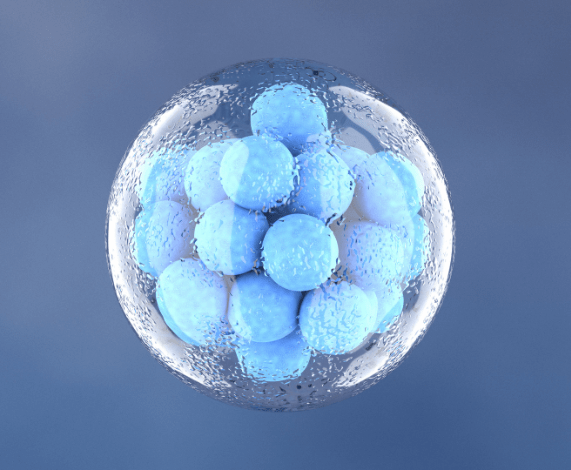
In assisted reproduction, one of the most delicate moments in the laboratory is observing how an embryo progresses from fertilisation to the blastocyst stage (usually on day 5 or 6 of development). Not all embryos reach this point. Some stop developing before becoming blastocysts, which in clinical terms is often described as embryonic developmental arrest.
What is a blastocyst and why is it important
After fertilisation, the embryo goes through several stages: zygote (1 cell), 2-cell, 4-cell, 8-cell, morula, and blastocyst. The blastocyst already shows a more complex cellular organisation, with an inner cell mass (future baby) and a trophectoderm (future placenta). Reaching this stage does not guarantee pregnancy, but it does indicate that the embryo has passed several critical early developmental milestones. For this reason, many clinics, such as IGIN, choose to culture embryos to this stage for transfer.
However, many embryos stop developing before reaching the blastocyst stage because the embryonic process itself acts as a biological selection mechanism: embryos with significant abnormalities have less capacity to continue development.
The most common cause: chromosomal abnormalities
The most frequent explanation is that the embryo presents aneuploidies (an incorrect number of chromosomes) or other relevant genetic abnormalities. These anomalies can originate in the egg, the sperm, or during the early embryonic cell divisions.
The risk of aneuploidy increases with maternal age, although it can occur at any age. In many cases, the embryo begins development normally but stops precisely when it needs to correctly activate its genetic program to continue developing.
When an embryo does not reach the blastocyst stage, it is usually due, in most cases, to biological limitations of the embryo itself, especially chromosomal abnormalities or reduced embryonic competence. Laboratory or culture conditions are typically ruled out as a cause, as clinics usually have highly controlled systems in place (for example, at IGIN we use state-of-the-art incubators such as EmbryoScope+).
Preimplantation Genetic Diagnosis as a solution
When embryos repeatedly fail to reach the blastocyst stage or show arrested development, Preimplantation Genetic Diagnosis (PGD) is often recommended. This allows embryos to be analysed before transfer in order to detect possible chromosomal abnormalities, which are one of the most common causes of embryonic arrest. This not only helps identify embryos with a higher potential for development and pregnancy, but also avoids transferring embryos that would not be viable.
It is not necessary in all cases, but in certain profiles (especially when there are repeated embryo development failures, advanced maternal age, or suspected genetic factors), it is often a recommended tool within a personalised treatment approach.